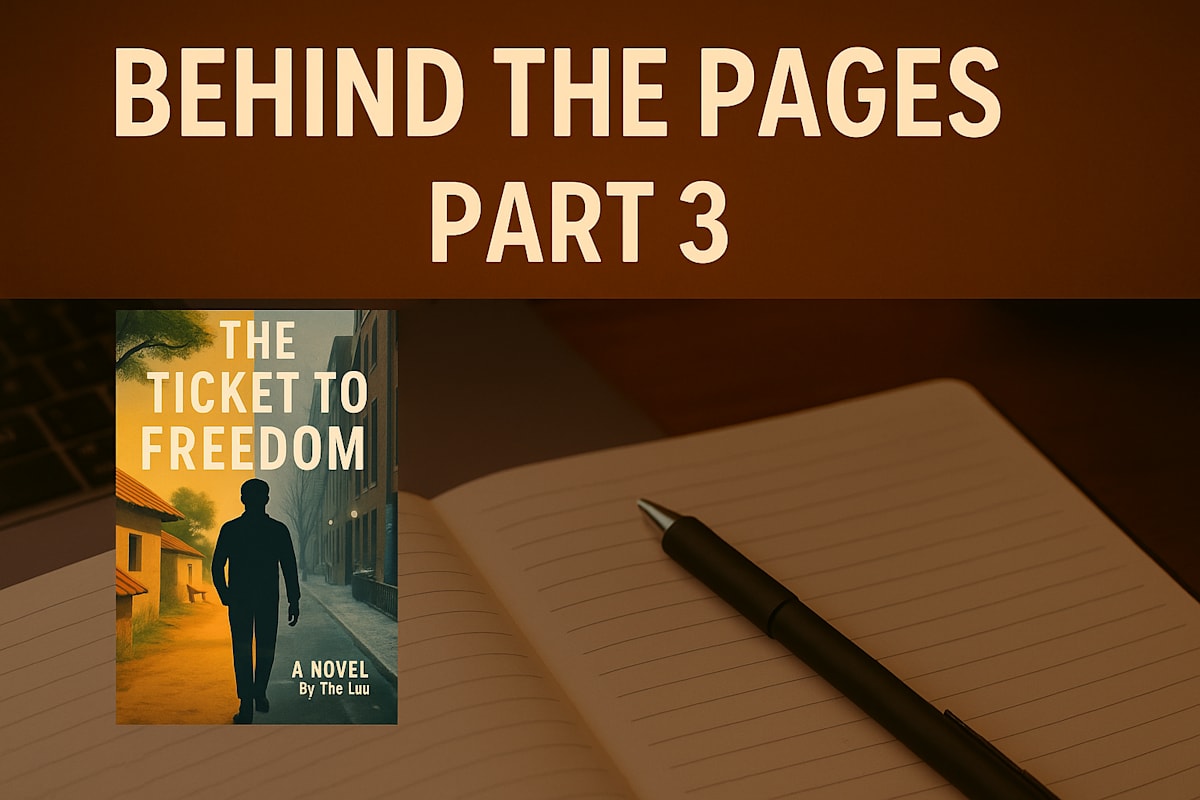
If David is the foundation of the story, then the other characters are the beams, walls, and hallways — each one shaping how the house feels from the inside.
Writers like to pretend we’re in control of our characters. But the truth is gentler, and a little humbling: we don’t create them so much as meet them. And if we’re paying attention, they show us who they really are.
Daniel was the first to surprise me.
He stepped onto the page quietly — gentle, steady, almost easy to overlook. I assumed he’d stay small, a soft thread woven through David’s emotional journey.
But he wouldn’t stay small.
He expanded with every scene — steadying David, challenging him, softening him, grounding him. He became a mirror:
- reflecting truth David avoided
- offering love that didn’t demand shrinking
- bringing a kind of emotional steadiness David didn’t know he needed
He grew into the quiet force of the story. A gentle gravity that pulled the narrative inward, toward honesty.
Mama shifted too — more than I expected.
At first, she was an outline. A symbol. A weight David carried but didn’t fully understand.
But the more I wrote her, the more her edges softened. Then sharpened. Then softened again.
She revealed layers I didn’t plan:
- fear braided with hope
- tradition tangled with tenderness
- the silent sacrifices immigrant parents make without naming them
She became an emotional anchor — a reminder that love is often complicated, inherited, and carried even when it hurts.
And then there were Celeste, Rachel, Lilian, Uzo, etc. — the constellation of voices that added warmth, chaos, humor, and cultural rhythm.
They weren’t meant to take up much space.
But they brought:
- laughter that eased heavy chapters
- familiarity that felt like kitchen-table storytelling
- small cultural details that made the world feel lived-in
- the kind of noisy love that follows you across oceans
They didn’t ask for permission to grow. They simply did.
And in doing so, they widened the story’s emotional landscape.
These characters didn’t stay where I placed them.
They unfolded. They insisted. They became.
And the book is fuller, truer, and more human because of them.