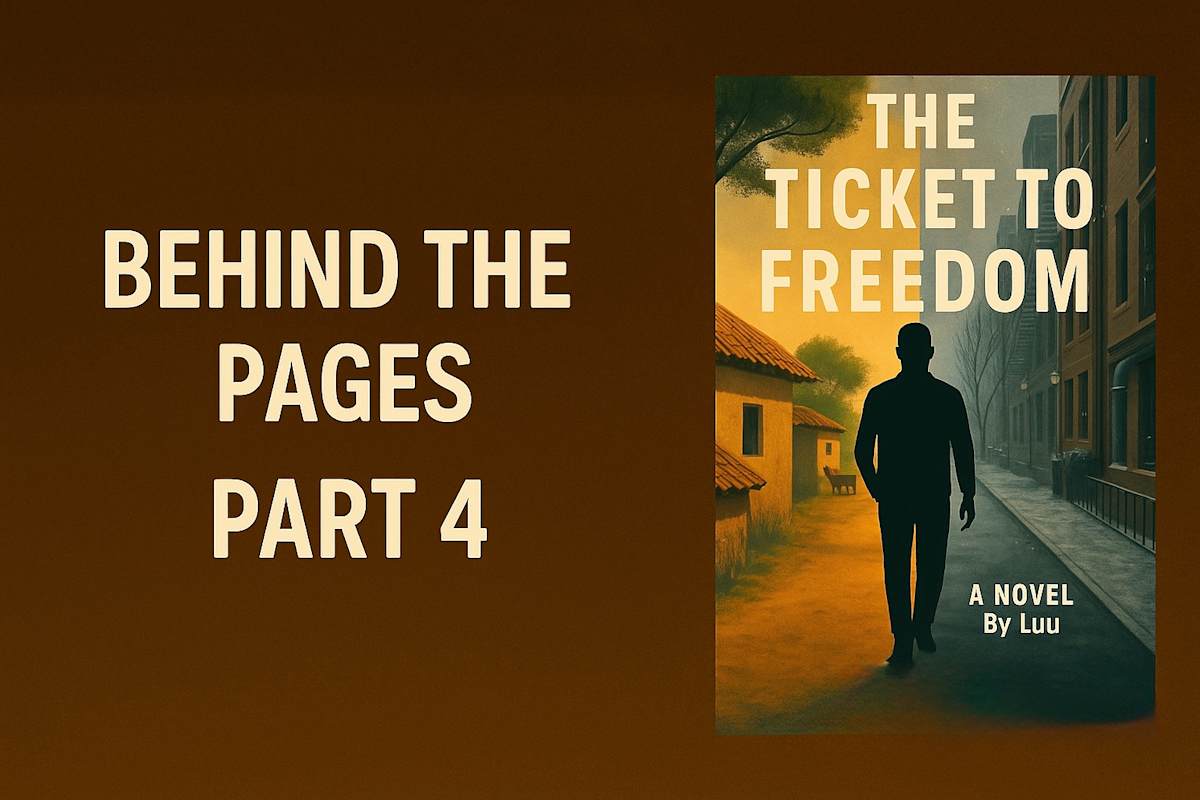
Even though the story is fictional, grounding it in truth mattered to me.
Representation isn’t only about accuracy — it’s about honoring experiences. And as someone who is both Nigerian and queer, the emotional honesty in this book didn’t come solely from research. It came from the intersections I’ve lived.
Being Nigerian shaped how I wrote about family, culture, silence, duty, and the unwritten expectations placed on sons.
Being queer shaped how I wrote about fear, longing, identity, and the courage it takes to break patterns you were raised inside of.
Those dual identities informed every layer of realism in the story.
I understand what it means to grow up in a culture where queerness is treated as something to hide, fear, or pray away. I know the emotional gymnastics of honoring your family while trying not to lose yourself in the process.
And I know the ache of stepping into a new country hoping for more room to breathe — only to discover that healing doesn’t automatically begin just because the environment changes.
Still, I researched deeply to widen the world beyond my own experiences:
Immigration
I studied visa lottery processes, cultural transitions, and the emotional fatigue that comes with starting from zero. My own immigrant background helped me write the emotional truths — the research helped shape the technical ones.
Chicago
I explored neighborhoods, transit routes, weather patterns, and the textures that make the Midwest feel both hopeful and lonely. I wanted readers to feel the disorienting mix of possibility and isolation a new city can hold.
Nigeria
This part came from memory, not Google. Nigerian culture is layered and intimate, and I wove in:
- the way families speak through implication more than confession
- the tension between love and expectation
- how silence can be both discipline and protection
- the humor, warmth, and complexity that fill Nigerian homes
These details come naturally when you’ve lived inside them.
Queer psychology
I researched internalized fear, identity development, trauma responses, shame, chosen family, and the slow process of trusting love when you weren’t raised to expect safety from it.
But being queer gave me something research can’t:
an instinctive understanding of what it feels like to move through the world with both hope and guardedness.
Every part of this book — from Lagos to Chicago, from silence to self-acceptance — is shaped by truth:
truth I lived, and truth I researched.
The final installment of this series is up next.