Some books are written.
Others are survived.
And a few — like this one — are felt all the way through.
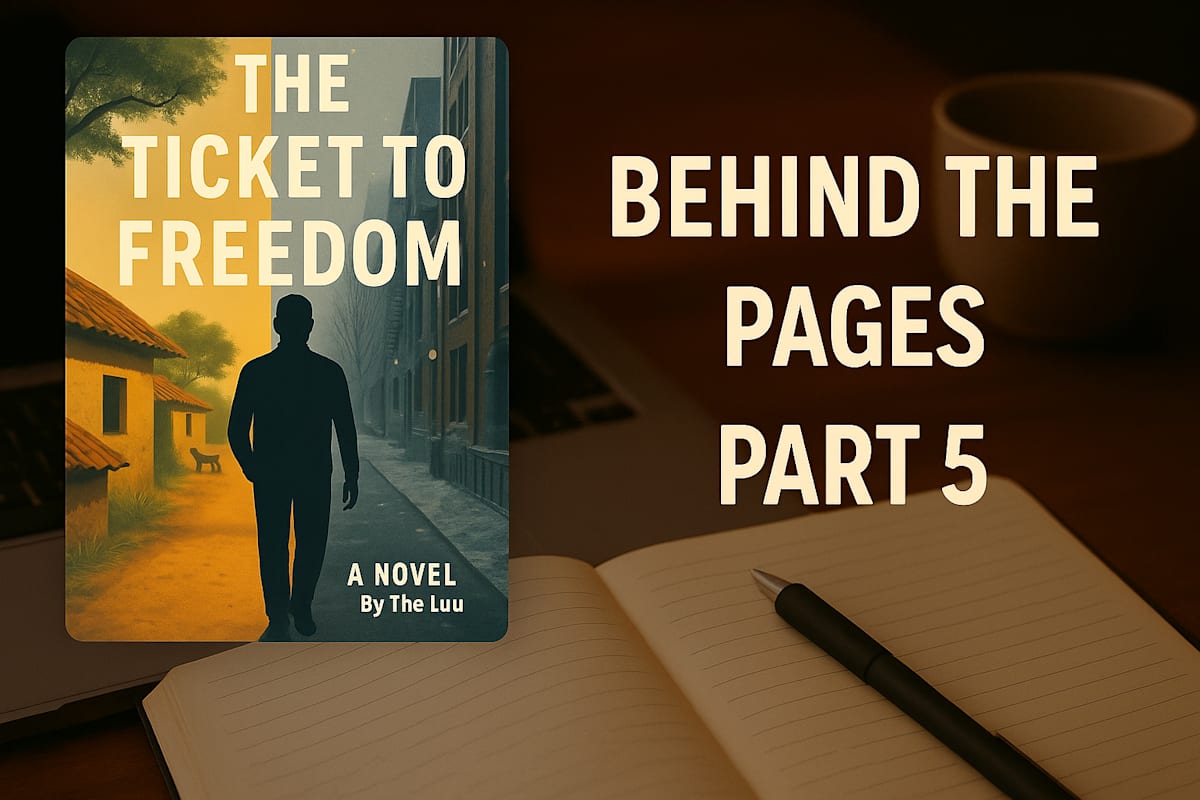
Writing The Ticket to Freedom was never just about building plot or creating characters. It meant sitting with emotions that lived quietly in my chest for years — the fears I inherited, the identities I carried, the contradictions I learned to navigate. As a Nigerian, queer, immigrant, I understood the weight of this story in a way that made the writing both healing and heavy.
There were days I stopped mid-sentence because the truth behind the fiction cut too close. Scenes touching shame, silence, family expectation, identity, or longing hit differently when you’ve lived inside the very feelings you’re trying to articulate. But avoiding them felt dishonest — to myself, and to the character.
This story asked me to confront truths I once tucked away:
• the fear of disappointing family
• the instinct to shrink so you’re not seen too clearly
• the longing for a love you were told wasn’t meant for you
• the ache of leaving home believing distance would make truth easier
• the guilt of choosing yourself in cultures built on sacrifice
The emotional cost didn’t come from what I wrote — it came from what the story reflected back at me.
But there was beauty in the process too.
As the pages grew, so did clarity.
The more I wrote David stepping into himself, the more I found I was stepping into my own truth — not loudly, but steadily. Writing gave language to the feelings I once carried in silence. It gave courage to things I once only imagined.
This book taught me:
• that silence may protect you, but it can also bury you
• that identity is not betrayal — it’s a return
• that healing isn’t linear, but it is possible
• that chosen family is real, necessary, and sacred
• that freedom isn’t granted — it’s claimed
• that being Nigerian and queer isn’t a contradiction, but a story of survival and becoming
By the time I reached the final chapter, I realized something profound:
I wasn’t just telling David’s story — I was finding language for pieces of my own.
Writing this novel didn’t just complete a book.
It completed a part of me.
Thank you for walking this journey with me — from Part 1 all the way to here.
If any part of this series met you where you are, I hope the full novel finds you too.